Close Enough to Touch: The Complicated Truth About Artists Selling Connection
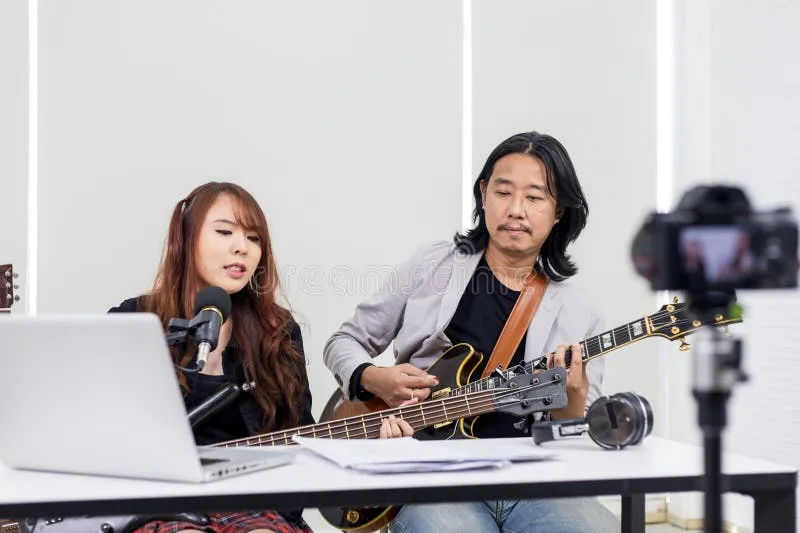
Photo: musician livestreaming laptop fan community online engagement, via thumbs.dreamstime.com
There's a moment that happens in a lot of Discord communities now that would have felt genuinely surreal ten years ago. A musician — maybe someone with 50,000 monthly Spotify listeners, maybe someone with 500,000 — hops into a voice channel and just... hangs out. Talks about their day. Answers questions. Jokes around with the people who pay $10 a month to be there. For an hour, it feels less like a fan community and more like a group of friends.
That feeling is the product. And it's selling incredibly well.
The Architecture of Intimacy
The creator economy didn't invent parasocial relationships — those have existed as long as people have had parasocial relationships with celebrities, which is to say forever. But platforms like Patreon, Substack, Discord, and even the direct messaging features built into Instagram and TikTok have done something genuinely new: they've turned the illusion of closeness into a scalable revenue stream.
For independent artists, this is a lifeline. The math on streaming income is brutal and well-documented — you need millions of plays to generate meaningful money. But a few hundred dedicated fans paying $5 to $25 a month? That's rent. That's studio time. That's the difference between making music full-time and working a day job.
Bandcamp Fridays, Patreon tiers with handwritten notes and early access, Discord servers where the artist actually shows up — these aren't gimmicks. They're survival strategies that have genuinely allowed a wave of independent musicians to build sustainable careers outside the traditional label system. That's real, and it matters.
But the mechanism that makes it work is manufactured intimacy. The value proposition isn't just the music — it's the feeling of knowing the artist. Of being seen by them. Of mattering to someone whose work you love.
What Fans Are Actually Buying
Let's be honest about what's happening psychologically here, because I think it's worth naming directly rather than dancing around it.
Loneliness is at epidemic levels in the US right now — particularly among younger adults. The surgeon general has literally issued advisories about it. Into that vacuum, artist-fan platforms have stepped with something that mimics the texture of friendship: regular communication, shared inside jokes, the sense of being part of a community, and occasional moments of direct acknowledgment from someone you admire.
For a lot of people, this fills a genuine need. And I don't think that's inherently predatory — humans have always built emotional connections around shared cultural experiences. Fan communities have always been places where people found belonging.
But there's a distinction worth making between a community built around an artist and a relationship with an artist. Patreon and Discord blur that line deliberately, because blurring it is good for business. When a fan feels like they have a real relationship with a musician, they're more likely to stay subscribed, buy merch, show up to shows, and evangelize to their friends. The intimacy isn't fake exactly, but it's also not symmetrical. The artist doesn't know your name. They don't think about you between content drops. And that asymmetry can quietly do damage.
The Psychological Toll Nobody Likes to Talk About
There are fans who have spent real money — hundreds, sometimes thousands of dollars over the course of years — on subscriptions, exclusive merch, and crowdfunding campaigns for artists who have no idea they exist as individuals. When those artists pivot their sound, take a long hiatus, or simply fail to live up to the persona they've been selling, the emotional fallout can be genuinely significant.
This isn't a fringe phenomenon. Fan communities regularly process collective grief when a beloved creator goes quiet, changes direction, or turns out to be a different person than the intimate content suggested. The investment was real even if the relationship wasn't mutual.
There's also a subtler issue: the pressure these models put on artists themselves. Maintaining the performance of accessibility is exhausting. Showing up to Discord, responding to DMs, producing the kind of personal, vulnerable content that drives subscriptions — it's labor, and it's often invisible labor that doesn't get counted in anyone's sustainability math. Some artists have spoken openly about burning out not from the music, but from the relentless maintenance of intimacy with their audience.
The Model Isn't Going Away
None of this means the creator economy model is wrong or that fans should stop supporting independent artists directly — quite the opposite. Cutting out the middleman and building a direct financial relationship with an audience is genuinely one of the best things that's happened for independent music in a long time.
But it's worth going in with clear eyes. If you're a fan, the connection you feel is real, but it's probably not reciprocal in the way it feels. That doesn't make it worthless — it just means you should be honest with yourself about what you're paying for and why. Support artists whose work you love. Do it because the music matters to you, not because you're hoping to be noticed.
And if you're an artist building this kind of community, think carefully about the promises you're making and the expectations you're setting. The most sustainable version of this model is one where fans feel genuinely valued as a community rather than individually indispensable — because the latter creates a dynamic that's hard to maintain and easy to accidentally exploit.
The loneliness economy is real. Music has always been one of the better medicines for it. Just make sure you know what you're actually paying for.