The Scroll and the Song: What We Lose When Every Moment Has to Hook in Three Seconds
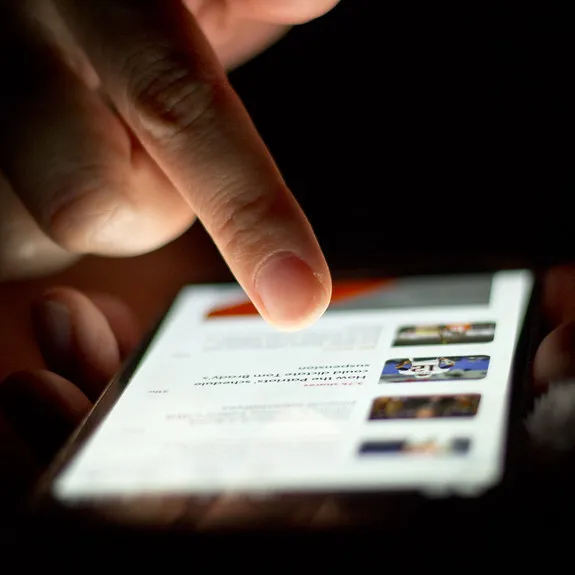
Photo: Japanexperterna.se, CC BY-SA 2.0, via Wikimedia Commons
I want to be clear upfront: I'm not here to write the millionth think piece blaming TikTok for everything wrong with culture. The platform has launched real careers, connected artists with audiences they never would have found otherwise, and produced genuinely creative content that wouldn't exist in any other format. That's real and it matters.
But something else is also real, and I think we're not being honest enough about it.
When a format optimized for the fastest possible dopamine hit becomes the primary way a generation discovers and experiences music, it changes what we're capable of appreciating. Not permanently, not irreversibly — but meaningfully. And the art that suffers most is the kind that was never designed to work in fifteen seconds.
What the Format Actually Rewards
TikTok's algorithm is, at its core, a machine for identifying and amplifying moments of peak emotional response. The hook at the 30-second mark of a song. The drop. The vocal run. The lyric that sounds like a caption. These things perform. They get used in videos, they get shared, they drive streams.
The problem is that this creates a powerful commercial incentive for artists to engineer their music around those moments specifically — to front-load the emotional payoff, to make the hook arrive earlier and hit harder, to sacrifice the slow build for the instant grab. We've talked about this on here before with the hook trap, and it's a real phenomenon.
But the downstream effect — the thing I want to dig into today — is what this does to listeners, not just artists.
Training the Ear (and Not in a Good Way)
Here's a question worth sitting with: when did you last listen to a full album straight through, without skipping, without checking your phone?
If you're under 25, that question might feel almost quaint. The idea of committing thirty to fifty minutes to a single artistic statement without interruption is increasingly foreign to how people actually engage with music. And platforms like TikTok, Reels, and YouTube Shorts are reinforcing that tendency every single day — training the neural reward circuitry to expect novelty at a pace that full-length, complex music simply cannot sustain.
This isn't speculation. Music educators across the country have been reporting for years that students have a harder time engaging with longer, more compositionally complex pieces. Attention falters. Restlessness kicks in. The absence of a hook in the first few seconds registers as failure rather than patience.
And it's not just music. The same thing is happening with film, with literature, with visual art. Anything that asks you to sit in uncertainty before rewarding you — anything that builds slowly toward something — is fighting against conditioning that short-form platforms have spent years reinforcing.
The Art That Gets Left Behind
Think about the music that genuinely wouldn't exist in a TikTok-first world. Pink Floyd's "Echoes" — a 23-minute piece that takes nearly ten minutes to fully establish its emotional landscape. Kendrick Lamar's To Pimp a Butterfly, an album that works as a unified statement and falls apart when you cherry-pick individual tracks. Sufjan Stevens' Carrie & Lowell, which is so quiet and so interior that it demands a particular kind of listening attention to land at all.
None of these would survive the scroll. Not because they're not extraordinary, but because their extraordinariness is structural — it lives in the architecture, the patience, the accumulation of meaning over time. You can't clip that.
And if the primary discovery mechanism for new music is a platform that can only surface the clipable moment, then music that doesn't have one becomes commercially invisible. Not bad, not irrelevant — just invisible. And invisible doesn't pay.
The Counter-Argument (Which Is Worth Taking Seriously)
I want to steelman the other side, because I think dismissing it would be too easy.
Short-form content has genuinely democratized discovery in ways that matter. Artists from small towns, from underrepresented communities, from genres that never got mainstream radio play have found audiences through TikTok that they simply wouldn't have found otherwise. That's a real good.
And there's an argument that the format just rewards different kinds of craft, not lesser craft. Writing a song that communicates something genuine in fifteen seconds is hard. It requires economy, clarity, and a kind of emotional directness that longer forms can afford to avoid. That's a skill.
But — and this is the crucial part — that skill existing and thriving doesn't require the longer, more complex form to disappear. The problem isn't that short-form content exists. It's that the algorithmic infrastructure of our entire media ecosystem has been optimized for it, at the expense of everything else.
What We Can Actually Do
I'm not going to tell you to delete TikTok. That's not a real answer and we both know it.
But I do think there's something worth practicing here, deliberately. Put on an album — a real album, one that demands something from you — and commit to it. Don't skip. Don't check your phone. Let it be slow where it's slow. See what's on the other side of the restlessness.
Support artists who are making complex work, even when it doesn't clip well. Buy the record. Go to the show. Tell people about the song that took you three listens to understand.
The attention span we're talking about isn't gone. It's just out of shape. And like anything out of shape, the only fix is use it.