The Crowd Took the Crown: What Happens When Fans Run the Taste Machine
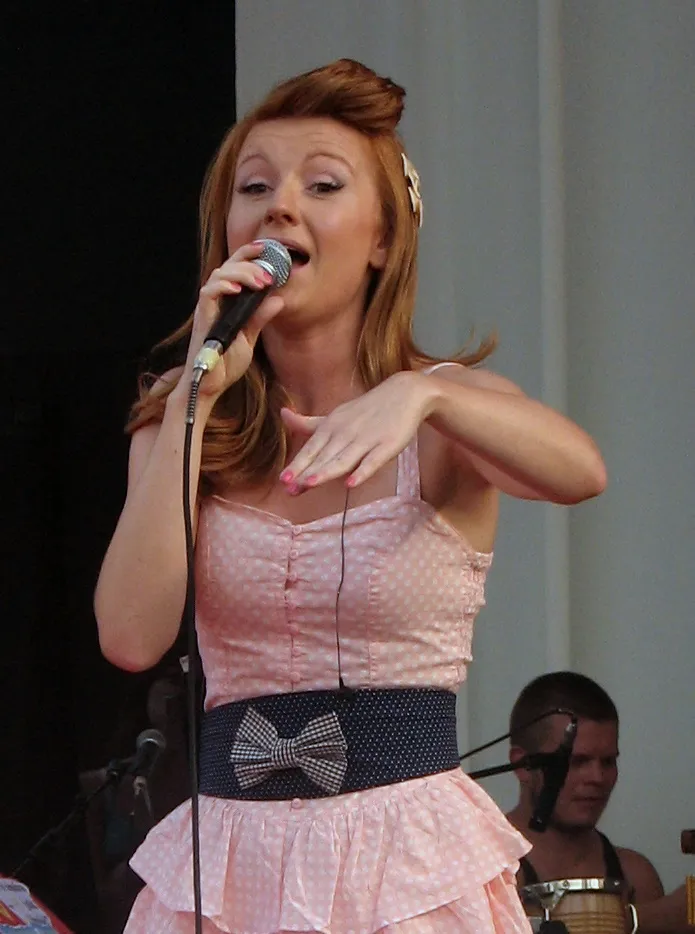
Photo: Starscream, CC BY-SA 3.0, via Wikimedia Commons
For most of pop music's history, a relatively small number of people got to decide what was worth your time. Critics at major publications. Radio programmers. MTV gatekeepers. Record label A&R executives who had the power to sign or pass on an artist based entirely on their own gut read of the culture.
You could argue about their taste. You could accuse them of bias — and you'd often be right. But they had the keys, and if they didn't let you in, a lot of people simply never heard your music.
That system is largely gone now. And what replaced it is messier, louder, more democratic, and in some ways more ruthless than anything the old guard ever managed.
The New Tastemakers Don't Have Business Cards
The machinery of music discovery has been redistributed. It lives in Reddit's r/indieheads threads where a Bandcamp link gets passed around until someone with a big following notices. It lives in Discord servers where superfans dissect unreleased snippets and build consensus about an artist's trajectory before the label has finished the rollout plan. It lives in TikTok comment sections where a sound goes from niche to unavoidable in seventy-two hours because enough people stitched the same audio clip.
The people running this machinery aren't critics with editorial budgets. They're enthusiasts. They're obsessives. They're, in many cases, teenagers with strong opinions and a lot of time online. And their collective judgment now shapes chart performance, streaming numbers, and cultural relevance in ways that would have seemed impossible fifteen years ago.
This is the part of the story where a certain kind of music writer usually says something celebratory about democratization. And look — there's real truth to that narrative. Artists who never would have been touched by traditional media have built massive audiences through fan-driven discovery. Bedroom producers have gone platinum. Regional sounds have crossed cultural lines they never would have cleared through the old gatekeeping infrastructure. That's genuinely good.
But the full picture is more complicated, and the complications don't get talked about enough.
Fan Validation Is Real — and Really Demanding
Here's something worth sitting with: the old gatekeepers were powerful, but they were also relatively few. If a critic panned your album, you could survive it. If a radio programmer passed, there were other programmers. The system was exclusionary, but it was also finite.
Fan communities are neither of those things. They're everywhere, they're always on, and when they turn on an artist, the pile-on has a scale and a speed that no individual critic ever achieved. The same collective energy that can make an independent artist's career in a week can also end it — or at least damage it significantly — when the community decides something has gone wrong.
Artists who built their careers through fan community support often describe a particular kind of pressure that comes with it. The fans who made you feel like they own a piece of you. They have opinions about your creative decisions, your personal life, your collaborators, your rollout strategy, your response times to DMs. They crowdsourced your success, and some of them feel like that entitles them to a vote on your future.
The old critics were gatekeepers. The new fans are sometimes something closer to stakeholders — and the terms of that relationship aren't always clear until something goes sideways.
The Authenticity Paradox
One of the things fan-driven tastemaking was supposed to fix was the inauthenticity of the old system — the sense that industry insiders were pushing music that served commercial interests rather than genuine quality. And in some ways, it has. Fan communities can smell a calculated move from a mile away. They're often brutally accurate about when an artist is being fake.
But fan consensus creates its own authenticity theater. There are entire subcultures built around the performance of having discovered something first, of having correct opinions about the right artists, of being on the right side of a particular fandom's internal politics. The social dynamics inside big fan communities can be just as hierarchical and gatekeeping as anything the music industry ever produced — the hierarchy is just organized around different credentials.
And the music that rises to the top through these channels isn't always the most interesting music. It's often the music that's most legible to existing community values, most shareable in the formats that drive discovery, most compatible with the specific aesthetic languages that happen to be dominant in a given corner of the internet right now. That's not the same thing as best.
What We Actually Lost When the Critics Left
I want to be careful here, because there's a version of this argument that's just nostalgia for a system that was genuinely exclusionary in ways that hurt a lot of artists and a lot of audiences. The old critical establishment had real blind spots — racial, cultural, generational — that shaped what got covered and what got ignored.
But there was something in long-form music criticism that fan community consensus doesn't fully replace: the sustained, considered engagement with an artist's work over time. The willingness to sit with an album that doesn't immediately reward you. The critical infrastructure that gave artists permission to be difficult, to make challenging work, to grow in directions that didn't immediately satisfy their existing audience.
Fan communities tend to reward what they already know they like. That's human — it's how taste communities work. But it can create a ceiling for artists who want to push into new territory. The fans who loved your first sound aren't always ready to follow you somewhere genuinely new, and in a world where fan metrics are the primary measure of success, that resistance has real consequences.
So Who's Actually in Charge?
The honest answer is nobody — and everybody. The taste machine is now genuinely distributed, which means no single voice can make or break a career the way the old gatekeepers could. That's real progress.
But distributed power isn't the same as no power. The communities, the algorithms, the platform incentives — they all shape what gets heard and what gets ignored, just through different mechanisms. The crown didn't disappear when the critics lost it. It just got passed around to a much larger, much louder, much harder-to-negotiate-with group of people.
For artists navigating this right now, the challenge is figuring out how to build genuine community without becoming hostage to it. How to be discoverable without being algorithm-bait. How to accept fan love without accepting fan ownership.
That's a harder balance than it sounds. And watching artists try to find it — some gracefully, some not — is one of the more interesting dramas in music right now.